
September 7, 2026
The surgery takes a few hours. Getting used to your new nose takes almost a year. That gap catches a lot of our patients off guard, especially the ones who assume the swelling should be gone by the time the stitches come out.
One of the most common calls we get isn’t during surgery planning; it’s two weeks after, when someone’s convinced something went wrong because their nose still looks puffy. Almost every time, it’s completely normal. Here’s what actually happens, stage by stage.
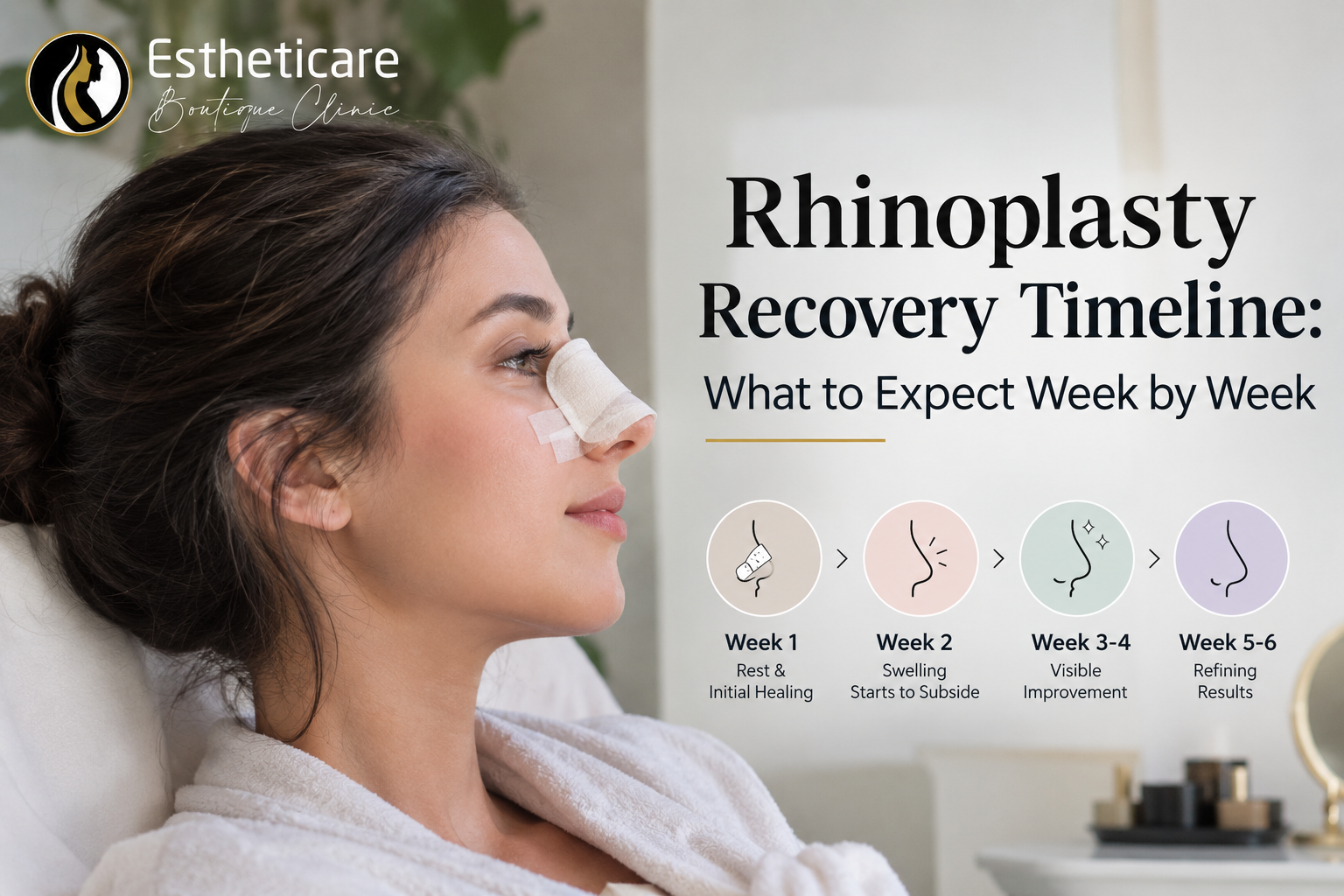
Rhinoplasty Recovery Timeline
| Timeline | What to Expect |
|---|---|
| Days 1 to 2 | Grogginess wears off, splint on, first puffiness shows up |
| Days 3 to 7 | Swelling and bruising peak before they start to ease |
| Week 2 | Splint comes off, most bruising has faded |
| Weeks 3 to 4 | Clear improvement, most routines resume |
| Months 2 to 3 | Nose looks close to its new shape, tip still firm |
| Months 4 to 6 | Roughly 80 to 90 percent of puffiness has gone |
| Month 6 to 12 | Final shape settles in, especially in thicker skin |
Week 1: Right After Surgery
What to Expect
The first week is the toughest part of recovery, so it’s best you know that upfront. Grogginess from the anesthesia fades within a day or two, and you’ll notice puffiness, a stuffy nose, and general tenderness. Between days three and seven, the swelling and bruising usually get a bit worse before they start improving.
Managing Swelling and Bruising
Sleeping upright matters more than people expect. Lying flat pushes fluid into the face overnight, which is why swelling often looks worse first thing in the morning. A couple of firm pillows or a wedge is usually enough.
What You Can and Can’t Do This Week
If you wear glasses, keep the frames off your nasal bridge for four to six weeks. Even light frame pressure can shift healing cartilage, so taping them to your forehead or switching to contacts works better. Avoid bending over, blowing your nose, and any strenuous activity, since all of that puts extra pressure on the area that’s still healing.
Week 2: Splint and Stitch Removal
What Happens at the Removal Appointment
Around the one-week mark, we remove the splint and any external stitches. It’s a quick visit, and most people are relieved just to see their nose again, even though it’s still swollen underneath.
How Your Face Looks at This Stage
Something that surprises a lot of patients at this visit is that the tip of the nose heals much slower than the bridge. Sometimes this difference lasts several months. The bridge might already look fairly settled, while the tip still feels firm or a little numb. This is completely normal and not something to worry about.
Easing Back Into Light Activity
Most people feel comfortable going back to work or school around this point, as long as the job isn’t physically demanding. Light walking is fine, but bending, lifting, or anything strenuous should still wait.
Weeks 3 to 4: Early Healing Phase
Signs You’re Healing on Track
The obvious bruising is gone by now, and the bridge starts looking noticeably closer to its final shape. It’s still not the finished result, and comparing your nose to old photos every day can make this stage feel slower than it is.
Why Some Swelling Still Lingers
If you’re timing surgery around a wedding or event, four weeks is rarely enough runway. We usually recommend booking at least two to three months ahead, since swelling that looks fine in person can still show up in photos.
Getting Back to Normal Routines
Light exercise is usually fine around the four-week mark. Contact sports, heavy lifting, or anything risking a bump to the face should wait until your surgeon clears you at a follow-up.
Month 2 to 3: Settling In
How Your Nose Continues to Change
By two to three months, the puffiness along the bridge has mostly settled, and the nose starts blending into the rest of your face. Many patients say this is when peoples stop noticing anything happened at all.
What’s Still Considered Normal
Some tip firmness is still normal at this point. Skin type also plays a role here. In our experience with South Asian patients, thicker skin tends to hold onto swelling for longer. This is one reason why final results in the tip can take closer to a year for some people.
Resuming Full Physical Activity
Most patients get cleared for more intense exercise and contact sports somewhere in this window. We confirm the exact timing at your follow-up rather than giving a fixed date, since healing speed genuinely varies.
Month 6 and Beyond: Final Results
Seeing Your Final Nose Shape
By four to six months, most patients have roughly 80 to 90 percent of their swelling resolved, and the nose closely resembles its final shape. Between six months and a year, the skin fully adapts, and any lingering numbness usually clears up.
Long-Term Care After Full Recovery
If you had a revision rhinoplasty rather than a first surgery, expect this stretch to run longer. Scar tissue from the earlier procedure makes healing slower, and we generally tell revision patients to think in terms of twelve to eighteen months rather than six to twelve.
When to Contact Your Surgeon
Mild swelling, bruising, and some discomfort are normal after surgery. These usually settle down on their own within a few days. Some symptoms need urgent attention. These include heavy or worsening bleeding, fever, discharge from the incision, pain that medication doesn’t help with, or sudden swelling on just one side that appears later than expected. If any of these happen, contact the surgeon right away. It’s always better to check and be safe than to wait it out.
Tips to Speed Up Recovery
- Sleeping with the head elevated helps reduce swelling more than almost anything else. It’s one of the easiest habits to keep up at home.
- Cutting back on salty food for the first couple of weeks also helps, since salt makes the body hold onto fluid.
- Dust can make things worse too, especially in Islamabad during drier months. Wearing a loose cotton mask, without letting it press on the nose, helps avoid sneezing, which puts sudden pressure on the healing area.
- Patience matters more than any of these tips. Results take time, and judging them too early usually just leads to unnecessary worry.
Is Rhinoplasty Recovery Painful?
Most patients feel pressure and stuffiness rather than sharp pain. The first few days are the toughest. Prescribed medication keeps the discomfort manageable during this time. By the second week, most people need little to no pain relief at all.
Anyone planning a rhinoplasty and looking for a recovery timeline based on their own skin type and schedule can book a consultation to get a clearer picture.
FAQ’s
How long does rhinoplasty recovery take overall?
Most visible swelling and bruising clears within two to four weeks, but the final shape, especially at the tip, can take six months to a full year to settle.
When can I go back to work after rhinoplasty?
Most people return to work or school around one to two weeks after surgery, depending on how physical the job is.
Why does my nose still look a bit swollen months later?
The tip heals more slowly than any other part of the nose, and mild tip swelling three to six months after surgery is still completely normal.
When can I exercise again after rhinoplasty?
Light activity is usually fine around three to four weeks. Contact sports and intense workouts typically need clearance around two to three months.
How far in advance should I plan surgery before a wedding or event?
At least two to three months, not four weeks. Swelling that looks fine in person can still show up in photos closer to the day.
What symptoms after rhinoplasty need urgent attention?
Heavy bleeding, fever, discharge from the incision, unmanaged pain, or sudden one-sided swelling appearing after the early healing period should be reported right away.
Does revision rhinoplasty take longer to heal than a first surgery?
Yes. Scar tissue from the earlier procedure slows healing, and final results often take twelve to eighteen months rather than six to twelve.